Recent developments in AP as well as in many parts of the country related to post harvest woes among farmers have drawn attention from all stakeholders in agriculture from within the country as well as abroad. Media have been abuzz with various reports related
to many unfortunate incidents of huge damage and losses for paddy farmers due to failure of timely & quick harvesting, procurement issues as well as remunerative price of the paddy. Agitating farmers have gone to the extent of declaring crop holiday in several districts in AP and thus many
hectors of paddy fields are not cultivated so far. Harvested paddy output is more than the storage capacity in the state. As an outcome
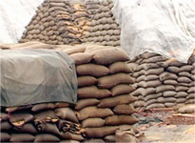
of this the excess paddy is being stored unprotected, resulting in the damage of huge quantity of the output and many more tons of
the inappropriately stored grain facing the same outcome. Despite bumper harvest received in the season, farmers, government, mills, all other stakeholders in the sector are not able to rejoice the success due to this post harvest woes.
The situation is not different for fruits and vegetables, since year after year many F&V produces glut the whole space between farm to market resulting in post harvest losses ranging between 30-40%
It would be inappropriate to state that this situation was unforeseen, since many years discussions and debates have been going on
about this “weak link” in the agriculture value chain. It will also be inappropriate to put the entire culpability on the government
since these issues need to be collectively addressed and solved by government, private sectors companies, agriculture cooperatives,
mills & cold storages, post harvest and value chain experts, NGOs & agriculture financial institutions.
As there is a gap of 32 million tons the Government of India has recently announced allocation of funds for increasing storage capacity in the country. Government of AP has already requested the central government for funds to create additional storage capacity for 28 lakhs tons.
Bottlenecks in attracting private investment in this sector needs to be addressed by the government. Unless investment in the sector
is made viable private investors will not be attracted. Lack of continuous power supply, high power costs, low scale of operations, are the biggest challenges faced especially by cold storages. Approval procedures under many schemes are time consuming involving multiple levels. Mere increase in investment of physical structures will not help without proper supply chain and market linkages in place.
Agri-logistics & Supply Chain Management
1 day – National Seminar & Exhibition for Augmenting Investment Opportunities in
Agriculture Logistics & Supply Chain in Andhra Pradesh
11th February, 2012, Katriya Hotel & Towers, Rajbhavan Road, Hyderabad
Agriculture Logistics & Supply Chain in Andhra Pradesh
11th February, 2012, Katriya Hotel & Towers, Rajbhavan Road, Hyderabad


Copy right reserved © 2011 Agro Chain